Luxury Furniture Restoration Faridabad — Expert Care for Exceptional Pieces
Specialist restoration for designer, heritage and imported furniture in Faridabad's premium villas and residences. Because extraordinary pieces deserve extraordinary care — not the nearest workshop.
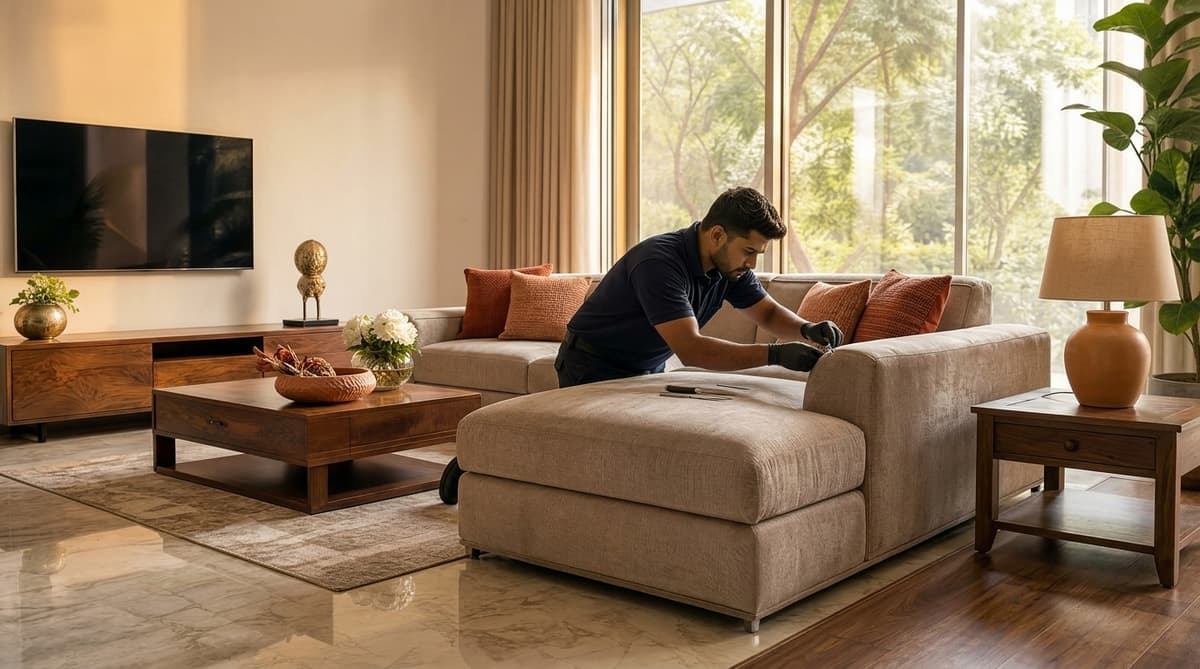
Luxury Furniture Restoration in Faridabad | Premium upholstery & foam service | Home visit | FurniRevive
Quick Answer
FurniRevive provides premium luxury furniture restoration in Faridabad, handling designer, heritage, European and custom pieces with the material standards and technical expertise their value demands. We serve villa owners and premium apartment residents across all major sectors.
Trusted by thousands of families across Faridabad, FurniRevive is the go-to choice for dependable, quality furniture repair with a warranty you can count on.
There is a category of furniture that does not belong in a standard repair workshop. A Biedermeier cabinet that has been in a family for three generations. A pair of Knoll chairs purchased in New York fifteen years ago and shipped to a Greater Faridabad villa. A bespoke dining table commissioned from a craftsman in Jaipur whose inlay work took four months to complete. A B&B Italia console that cost more than many people's cars. These pieces require a fundamentally different approach to restoration — one that begins with understanding what the piece is, what it is made of and what its owner values about it.
Faridabad's premium residential landscape has changed considerably. The villa communities in Sectors 46, 48 and 49, the large apartments in BPTP Parklands and Emerald Heights, the townhouses in Puri Aman Vilas — these homes contain furniture of a calibre that was rarely seen in Faridabad a decade ago. International travel, access to premium Delhi showrooms, a growing appreciation for European and heritage Indian craftsmanship — all of these have brought genuinely extraordinary pieces into Faridabad homes. When these pieces need attention, the gap between what is available and what is required becomes very apparent.
Luxury furniture restoration is not simply furniture repair performed more carefully. It requires knowledge of the original material specifications — the wood species used in a specific French cabinet maker's work, the leather grade characteristic of a particular Italian manufacturer's output in a given decade, the joinery techniques that identify a piece as genuinely handcrafted versus factory produced. Without this foundational knowledge, even careful intervention can produce results that are visually wrong or that damage the piece's authenticity.
We have built this service around the needs of Faridabad's most discerning furniture owners. The clients who call us are not looking for a cheap fix. They are looking for the confidence that their ₹5 lakh Italian sofa, their great-grandmother's teak armoire, their custom dining table will be returned in better condition than it left — handled by people who understand what they are holding.
With rising furniture prices across Delhi NCR, residents in Faridabad increasingly turn to professional repair as the smart, economical alternative to buying new.
Sofa Repair Near Me in Faridabad
A FurniRevive technician reaches Faridabad within 2–4 hours.
When Faridabad residents search for sofa repair near me, fast response is what separates a good service from a great one. FurniRevive's local sofa technicians are stationed across Faridabad and reach your residential locality within 2–4 hours. We arrive with foam, fabric, springs, and tools for complete doorstep sofa repair — no pickup, no workshop, no wait. Our team handles fabric sofas, leather sofas, wooden sofas, recliners, sofa cum beds, and full upholstery as home sofa repair in a single visit.
Common issues we fix in Faridabad include sofa sagging from worn foam, torn fabric upholstery, sofa frame repair for wobbly joints, sofa spring repair for collapsed seating, and leather sofa repair for peeling or cracked surfaces. Sofa repair cost in Faridabad starts at ₹500 per seat with a free inspection — no obligation, no hidden charges. Call or WhatsApp to book the best sofa repair in Faridabad and get a 6-month warranty on every job.
Sofa Repair Service in Faridabad and Nearby Areas
Fastest response near Crown Interiorz Mall, YMCA Chowk, Surajkund Crafts Mela Ground. Our locally stationed technicians complete sofa repair in Faridabad every day — at apartments, independent houses, offices, and restaurants alike. Transparent pricing starting ₹500 with a free doorstep inspection before any work begins.
Frequently Asked Questions — Faridabad
- How much does sofa repair cost in Faridabad?
- Sofa repair cost in Faridabad starts at ₹500 for basic cushion work. Foam replacement is ₹999–₹2,500 per seat, fabric re-upholstery from ₹2,000 per seat, leather sofa repair from ₹1,500, and full set restoration from ₹8,000. FurniRevive provides a free doorstep inspection before any work begins — no obligation, no hidden charges.
- Is the doorstep inspection free in Faridabad?
- Yes, FurniRevive offers a completely free doorstep inspection in Faridabad. Our technician visits your home, diagnoses the sofa thoroughly, and provides a detailed itemised quote — no obligation, no call-out fee. Repair work only begins after you approve the quote.
- Is there a warranty on sofa repair in Faridabad?
- All repairs completed in Faridabad are backed by a 6-month written warranty. It applies to every job — from a single cushion foam replacement to a full 5-seater restoration. Contact us within the warranty period for any covered issue and our technician returns for free.
- Do you offer same-day sofa repair in Faridabad?
- Same-day doorstep sofa repair in Faridabad is available when you book early in the day. WhatsApp us photos of the damage at +91 92179 99355 and we'll confirm a same-day slot. For urgent jobs, calling directly is faster than the online form.
- How long does a sofa technician take to reach Faridabad?
- Our nearest sofa technician reaches your address in Faridabad within 2–4 hours in most cases. For early-morning bookings, the technician often arrives within 1–2 hours. WhatsApp +91 92179 99355 with your pincode or society name for the most accurate estimate.
- Which areas near Faridabad do you service?
- FurniRevive covers Faridabad and the surrounding Faridabad areas under a single, consistent pricing structure. Our technicians don't charge extra for travelling between sectors or neighbouring colonies. Confirm your specific address by calling 92179 99355 or WhatsApp-ing +91 92179 99355.
- How do I know if my sofa is worth repairing or should be replaced in Faridabad?
- For sofa owners in Faridabad, the repair-vs-replace decision comes down to frame quality and budget. A solid frame can be fully restored — new foam, springs, and fabric — for ₹12,000–₹22,000, saving 60–70% over a new sofa. FurniRevive's free inspection gives you an honest assessment with no sales pressure to repair.
Why Choose FurniRevive?
Material & Brand Knowledge
We understand the construction of pieces from B&B Italia, Poltrona Frau, Rolf Benz, Minotti, Knoll, Herman Miller and other premium brands, as well as heritage Indian furniture made by master craftsmen in Rajasthan, Kerala and the artisan workshops of old Delhi. This knowledge informs every intervention decision.
Preservation-First Philosophy
Our default approach is to preserve and restore original materials wherever possible rather than replace them. Replacing original leather, wood finish or inlay work on a valuable piece reduces its authenticity and often its market value. We restore first, replace only when restoration is no longer viable.
White-Glove Handling & Transport
Premium furniture is collected and returned wrapped and protected to professional moving standards. We do not use the same handling protocols for a ₹50 lakh antique cabinet as we do for a budget sofa. Dedicated vehicle transport for fragile or irreplaceable pieces is available on request.
Documented Restoration Records
We document the condition of every luxury piece before work begins — photographs, measurements, notes on any existing damage or previous repairs. This record is shared with the client and maintained for future reference. For antique and heirloom pieces, this documentation has practical value beyond our service.
Heritage & Antique Expertise
Period furniture — from colonial-era teak pieces to mid-century Scandinavian designs to Mughal-influenced carving work — requires specific technical knowledge. We have worked on pieces from every major tradition of furniture making and understand the conservation-appropriate approaches each requires.
Transparent Communication Throughout
Luxury furniture owners are engaged clients who want to understand what is happening to their pieces. We provide clear explanations before, during and after every project. If we discover something unexpected during the work, we contact you before proceeding rather than making unilateral decisions.
Our Repair Process
Consultation & Piece Evaluation
We begin with an in-home consultation at your Faridabad residence. We examine the piece in detail — materials, construction, existing damage, previous repairs — and discuss your restoration objectives, timeline and any specific concerns. Complex pieces may require research before we commit to a restoration approach.
Restoration Plan & Quote
We prepare a detailed restoration plan covering every element of the proposed work — materials to be used, techniques to be applied, expected timeline and complete pricing. For significant pieces, we present this as a written document you can review at your own pace before approving.
White-Glove Collection
Collection is handled by trained staff using appropriate wrapping and transport protocols for the specific piece. Fragile or irreplaceable items receive additional protective measures during transit. Your piece is handled from your home in Faridabad to our workshop with the same care as a museum loan.
Expert Restoration
Restoration work is carried out by skilled craftspeople with experience in the materials and techniques relevant to your piece. Structural repairs precede cosmetic work. Original materials are preserved wherever possible. Progress photographs are shared at key stages for pieces where the owner wishes to stay closely informed.
Quality Review & Final Approval
Every restored piece undergoes a detailed quality review against the original scope before it is prepared for return. For high-value pieces, we invite the client to inspect the work at our workshop if preferred.
White-Glove Return & Placement
The restored piece is returned to your home, unwrapped in your presence and positioned to your satisfaction. We provide aftercare instructions specific to the materials used in the restoration and are available for any follow-up questions.
Why Faridabad's Premium Homes Choose Restoration Over Replacement
The straightforward economic case for luxury furniture restoration is compelling: a ₹3–10 lakh piece typically costs 10–25% of its value to restore comprehensively. Replacement costs 100% — and the replacement may not be the same piece in terms of quality, design or emotional significance. But the economic argument, while true, understates the real reason Faridabad's villa owners and luxury apartment residents choose restoration.
Premium furniture accumulates meaning. The dining table in a Sector 46 villa that has hosted fifteen years of important dinners. The pair of armchairs from a family home in Delhi that were brought to Puri Pranayam when the family moved. The bespoke cabinet designed by an architect for a specific wall in a specific room. These pieces cannot be replaced by a showroom visit, regardless of budget.
There is also an increasing sophistication among Faridabad's premium homeowners about furniture quality — an understanding that the craftsmanship, joinery and material quality in a genuinely good piece is simply not reproducible at any price in the current mass-market furniture industry. The revival of interest in handcraft, natural materials and furniture that tells a story has made restoration feel not just practical but aligned with a broader value system.
We find that our luxury restoration clients in Emerald Heights, BPTP Elite Floors and the villa sectors are deeply engaged with the process. They want to understand what is being done and why. They appreciate detailed explanation of materials and techniques. This is not like booking a plumber; it is a collaborative relationship around an object the client genuinely cares about.
Common Luxury Furniture Problems in Premium Faridabad Homes
Heat and humidity cycling is the primary environmental stressor for wooden furniture in Faridabad. The transition between peak summer — temperatures above 45°C in May and June — and monsoon humidity creates significant expansion and contraction stress in wood. Even well-dried, well-constructed solid wood furniture develops hairline cracks and veneer lifting if it is not in a climate-controlled environment. Many of the bungalows in Sectors 15, 17 and 19 are not comprehensively air-conditioned throughout, and furniture in non-air-conditioned rooms is particularly vulnerable.
Leather deterioration follows a predictable pattern in Faridabad's climate. Without regular conditioning, the natural oils in leather dry and the hide becomes brittle. Summer heat accelerates this process dramatically. By the time visible cracking appears on the surface, the subsurface deterioration has typically been underway for two to three years. Italian leather furniture — Poltrona Frau, Natuzzi Editions, B&B Italia — is particularly prone to surface cracking in this climate because the semi-aniline hides used in premium Italian furniture have more open pores than corrected-grain alternatives and dry faster under sustained heat.
Wood finish degradation — cloudiness, heat marks, watermarks and surface oxidation — is nearly universal on solid wood furniture in Faridabad homes over fifteen to twenty years old. This is not a sign of poor quality; it is the natural result of decades of use, cleaning and environmental exposure. The underlying wood is typically in excellent condition beneath a degraded finish. Stripping and refinishing these pieces reveals furniture of remarkable quality that simply needs its surface renewed.
Inlay and marquetry work — present in much of the heritage Indian furniture in Faridabad's established bungalows — is vulnerable to adhesive failure over time. Inlay pieces lift at the edges, particularly in humid conditions, and can eventually become lost. Re-setting original inlay is a specialised skill. Matching lost pieces requires both the appropriate material and the ability to cut it to fit exactly. We have this capability; most standard furniture workshops do not.
Signs Your Luxury Furniture Needs Expert Care
Veneer lifting at corners, edges or over the full surface of a panel is one of the clearest indicators that a piece needs professional attention. Veneer that has lifted but not yet separated can often be re-bonded successfully using appropriate conservation adhesives. Veneer that has fully separated and been lost requires matching a new veneer to the original species and figure — possible for most common species, more challenging for rare or exotic woods.
Structural looseness in chair and table joints is a sign that the original adhesive has failed. This is universal in furniture over approximately thirty years old; hide glue, used in traditional furniture joinery, has a finite working life and eventually fails as it dries and loses elasticity. A loose joint is not a structural disaster if caught early. Ignored, it leads to joint failure, which requires more extensive and expensive repair.
Finish cloudiness that appears as a milky or grey haze on lacquered surfaces is typically caused by moisture trapped in or under the finish layer. This is common after high-humidity monsoon seasons, particularly on antique and vintage pieces with original shellac or early synthetic lacquer finishes. In many cases, cloudiness can be resolved by a skilled finisher without stripping and refinishing; in others, a full refinish is required.
Hardware failure — hinges that no longer align, drawer runners that bind, locks that no longer engage — is often dismissed as a minor issue. In antique and designer furniture, original hardware is a significant part of the piece's character and, in some cases, its provenance. We source period-appropriate replacement hardware when originals are beyond repair, and we can service and adjust original hardware to restore correct function in most cases.
Restoration Services: Designer, Heritage & Villa Furniture
Designer furniture restoration — Italian, Scandinavian, mid-century American — requires knowledge of the original manufacturer's material and construction specifications. We maintain reference documentation on the major contemporary and vintage European furniture brands that are present in Faridabad's premium homes. When we work on a Poltrona Frau piece, we know the leather grade, stitching specifications and structural details that characterise authentic Poltrona Frau production. This knowledge guides every decision in the restoration process.
Heritage Indian furniture presents different but equally specialised requirements. Rajasthani carved furniture — the intricate sheesham and rosewood pieces found in many of Faridabad's established bungalows — requires cleaning, waxing and occasional structural repair techniques that are fundamentally different from those used on Western furniture. The carved surfaces demand tools and cleaning protocols that do not damage or flatten the carving detail. We have specific experience with this tradition.
Colonial-period teak furniture is a category we encounter frequently in Faridabad's older residential areas — Sectors 15, 16 and 17 in particular have substantial numbers of families who have lived in the same bungalows for three or four generations and have colonial-era furniture alongside it. This furniture is typically of exceptional quality — the teak used in the colonial period was old-growth material of a grade no longer commercially available — and deserves careful restoration rather than casual repair.
Villa furniture restoration often involves large statement pieces — dining tables, display cabinets, sideboards — that are central to the room's design language. Restoring these pieces requires understanding not just the piece but its role in the interior. A slightly different finish tone, a changed hardware style or a modification to the piece's profile can disrupt the visual harmony of an entire room. We work with a conservation-first principle that seeks to restore rather than transform unless transformation is explicitly requested.
Contemporary luxury furniture from European and American studios requires a different approach from heritage work. These pieces were designed for specific finishes, specific material combinations and specific construction methods. Improvising with substitute materials on a piece from a major design house can produce results that are visually wrong in subtle but immediately noticeable ways. We source materials from the same supply chains used by the original manufacturers wherever this is possible.
Repair vs Replacement for Luxury Pieces: The Real Calculation
Replacement is not actually an option for many of the pieces we are called to restore. You cannot replace a piece of furniture that was custom-built for a specific space with specific dimensions by a craftsman who may no longer be working. You cannot replace a family heirloom. You cannot replace a limited-edition designer piece that is no longer in production. For these pieces, restoration is not compared against replacement — it is the only path.
For pieces that can theoretically be replaced — current-production Italian sofas, contemporary dining sets from major brands — the comparison is more economic. A ₹4 lakh sofa can be restored comprehensively for ₹60,000–1 lakh. Replacement means ₹4 lakh plus delivery, plus the disruption of furniture delivery into a furnished premium residence and the disposal of the existing piece. The economics are clear.
The quality comparison also strongly favours restoration in most cases. A ten-year-old Italian sofa with a solid hardwood frame, high-resilience original foam and quality hide — even one showing surface cracking and some compression — is typically better-constructed than its current direct replacement. Italian manufacturers, like many luxury goods producers, have faced cost pressure over the past decade that has manifested in component grade reductions that are not visible on the showroom floor. What you see in a showroom today at the same price as your existing piece may not be the same quality.
We make this case transparently to our clients in Sector 46 villas and BPTP Parklands apartments, and they consistently confirm it from their own experience with recent furniture purchases. The advice to restore is not self-serving on our part; it is the honest assessment of someone who understands what furniture quality actually means.
Benefits of Professional Luxury Restoration
The most immediate benefit is financial: the cost of professional restoration is typically 10–30% of replacement cost for premium furniture. This gap widens significantly for heirloom and antique pieces whose replacement value is notional — you cannot buy what they represent.
Preservation of authenticity is a benefit that compounds over time. A well-restored antique piece retains its historical integrity and, in many cases, its potential market value. An antique that has been poorly repaired — with inappropriate materials, with replacement parts that do not match the original — loses both character and value. Professional restoration maintains the chain of authenticity.
There is a sustainability dimension that many of our clients in Faridabad's premium communities engage with thoughtfully. Manufacturing a new piece of furniture — even an inexpensive one — has significant environmental costs in raw materials, energy and transport. Restoring an existing high-quality piece extends its useful life by decades and eliminates those costs entirely. For clients who think carefully about their consumption choices, this matters.
The experience of living with a restored piece is also different from the experience of living with a new one. A restored family heirloom, or a designer piece that you saved rather than discarded, carries a narrative that a new showroom purchase cannot. Several of our clients in Puri Pranayam and Greater Faridabad have described the restored piece as more present and meaningful in their home than it was before.
Premium Materials Used in Luxury Restoration
Wood finishing materials for luxury restoration require matching the original finish type and sheen level as closely as possible. We stock a range of finishing products — shellac for traditional and period pieces, conversion varnish for durability-critical applications, penetrating oils for Scandinavian-style open-grain finishes, wax for carved and decorative surfaces — and we select based on what is appropriate to the piece rather than using a single product universally.
Leather for re-upholstery on designer and heritage pieces comes from the same tanneries that supply European furniture manufacturers. We use both aniline-dyed hides, which show the natural character of the leather and develop a rich patina, and pigmented corrected-grain hides, which offer greater uniformity and durability. The choice depends on the piece and the client's preferences and is made in consultation rather than by default.
Adhesives in heritage furniture restoration are selected based on the piece's age, material and construction tradition. Hide glue is appropriate for traditional joinery and provides a reversible bond — an important property in conservation work because it allows future restorers to disassemble and re-work joints without damage. Modern PVA and epoxy adhesives are used where strength requirements exceed what hide glue can provide and reversibility is not a concern.
Hardware sourcing for antique and heritage pieces is a specialised area. We maintain relationships with suppliers of period-appropriate hardware — cast brass hinges and locks in historical patterns, hand-forged ironwork for traditional Indian furniture, period-correct steel hardware for colonial-era pieces. When original hardware can be preserved through cleaning and adjustment, we always pursue this before sourcing replacements.
Why FurniRevive for Luxury Furniture Restoration in Faridabad
The standard of care we provide for luxury furniture restoration is not an extension of our standard repair service — it is a separate discipline built on different knowledge, different materials and different protocols. We recognise that a ₹10 lakh antique cabinet is not simply a more expensive version of a budget wardrobe. It is a different category of object that requires different handling in every respect.
Our experience with the furniture that Faridabad's premium residential community actually owns — Italian and European designer pieces, heritage Indian furniture, custom-commissioned work from NCR ateliers — means that we encounter familiar pieces rather than approaching each job without context. This accumulated knowledge makes our assessments more accurate, our restoration decisions better-informed and our results more consistent.
We also understand the communication requirements of luxury restoration clients. People who own valuable furniture are interested in their pieces and want to understand what is happening to them. We provide detailed explanations, welcome questions and maintain regular contact during longer projects. We do not return a piece with a brief 'it's done' — we walk you through what was done and why.
Our service is not the fastest or the cheapest in Faridabad. It is not intended to be. It is intended to be the right service for furniture that deserves the right treatment — and for homeowners who understand the difference.
Premium Areas Covered: Faridabad's Finest Residential Addresses
Luxury furniture restoration in Faridabad is most intensively concentrated in the villa sectors — Sectors 46, 48, 49, 15, 16, 17 and 19 — where bungalow-format residences tend to contain the largest quantities of heritage and premium furniture. We are deeply familiar with these areas and visit them regularly.
The premium apartment market — BPTP Parklands, Omaxe Heights, RPS Savana, Puri Pranayam, Emerald Heights, SRS Residency, BPTP Elite Floors and Puri Aman Vilas — has grown as a client base as the quality of furniture in these developments has risen. Residents of these communities are typically professionals with specific aesthetic preferences and the furniture to match.
Greater Faridabad, including its newer villa developments, is a growing part of our service area. The expansion of Faridabad's premium residential footprint southward and eastward over the past five years has brought new clients who are building premium interiors from scratch and want a restoration partner who can maintain those interiors over time. We cover all premium addresses in Faridabad and surrounding areas — contact us to confirm coverage for specific locations.
Case Studies from Faridabad Villas & Premium Homes
A client in Sector 46 contacted us regarding a pair of Poltrona Frau armchairs purchased in Milan approximately twelve years earlier and shipped to Faridabad when the family relocated. The leather had developed the characteristic surface cracking that affects Poltrona Frau's historical semi-aniline hides in sustained heat without conditioning. The frames and spring systems were in perfect condition. We sourced semi-aniline hide from a tannery whose output matched the colour and grain character of the original closely, stripped and rebuilt the seat foam to the original specification and returned the chairs looking almost exactly as they appeared when purchased. The client's description was that seeing them was 'like getting a part of Milan back.'
A family in Sector 19 had a large teak almira — a four-door colonial-period storage piece that had belonged to the family since the 1950s. The piece had sustained water damage during a monsoon infiltration event that had lifted the surface finish from two panels and caused one corner joint to fail. The original finish was a traditional shellac that had been overcoated with oil-based varnish at some point in the 1980s. We stripped all finish, repaired the corner joint with hide glue using the original mortise and tenon geometry, replaced the two affected panels with matched antique teak sourced from a salvage dealer in Delhi, and refinished the entire piece in a two-coat shellac appropriate to its period. The piece is now arguably in better condition than it has been in forty years.
In BPTP Parklands, a client owned a large custom-designed bookcase commissioned from an atelier in Connaught Place in 2016 — a floor-to-ceiling piece in natural walnut with integrated brass detailing. Several brass inserts had oxidised unevenly, the walnut finish had developed a heat-induced cloudiness in two sections, and three shelf supports had bent slightly under sustained load. We cleaned and stabilised all brass work, re-oiled the affected walnut sections with matched finishing oil and replaced the shelf supports with correctly dimensioned hardened brass alternatives that matched the original specifications. The restoration was completed without removing the piece from the room, saving the considerable logistics of dismantling and transporting a floor-to-ceiling installation.
A client in Greater Faridabad was restoring a haveli-style villa interior and needed to integrate several pieces of antique Rajasthani furniture — carved sheesham chairs, a large painted chest, and a jharokha screen — into a contemporary premium interior. The pieces required structural stabilisation, cleaning of accumulated wax and grime from carved surfaces, re-setting of inlay in the painted chest and colour-matching of several areas of painted decoration that had faded. The project was completed over six weeks, with the client maintaining close involvement throughout. The result — period antiques functioning as focal points in a contemporary villa interior — was exactly the brief.
Pricing for Luxury Furniture Restoration in Faridabad
Luxury furniture restoration is a bespoke service and cannot be meaningfully priced from a schedule without first understanding the piece and the scope of work required. We provide written restoration plans and quotes after the initial consultation visit, which is complimentary for all luxury restoration enquiries.
As a general orientation: comprehensive leather re-upholstery on a designer sofa, including foam replacement and frame inspection, typically falls between ₹80,000 and ₹1.5 lakh depending on the piece and material selection. Wood finishing restoration for a dining table or storage piece — stripping, repair, refinishing — typically falls between ₹25,000 and ₹80,000. Structural repair and joint work is quoted separately based on the extent of work required.
Complex heritage restoration — antique pieces requiring veneer repair, inlay re-setting, period-appropriate finishing and hardware work — is quoted case by case. These projects can range from ₹40,000 for relatively contained work to ₹3 lakh or more for comprehensive multi-element restoration of significant antique pieces. In every case, the quote reflects the actual work required and uses materials appropriate to the piece's quality and provenance.
Our craftsmen arrive with 200+ hardware items, 400+ fabric swatches, and professional tools — fully equipped for any Faridabad repair.
Key Benefits
- Preserve the authenticity and value of designer, heritage and imported furniture pieces
- Access to restoration expertise and materials not available through standard furniture repair services
- White-glove handling eliminates the risk of transport damage to valuable pieces
- Documented restoration record adds provenance information to antique and heirloom pieces
- Restoration costs are a fraction of replacement cost for genuinely premium furniture
- Specialist knowledge of European and heritage Indian furniture construction techniques
- Preservation-first approach maintains original materials and finish wherever viable
- Complete transparency on restoration approach before work begins
- Long-term material quality: materials used match or exceed the original specification
- Trusted by Faridabad villa owners and luxury apartment residents for irreplaceable pieces
Real Repair Results Across Delhi NCR
See actual before and after transformations by our skilled craftsmen across Delhi NCR.
Leather sofa repair-Dwarka
Lounge Chairs Reupholstery - Gurgaon
Sofa Complete Makeover - Delhi
Service Areas in Faridabad
We provide doorstep furniture repair services across Faridabad including:
Frequently Asked Questions
Related Pages
Helpful Guides & Tips
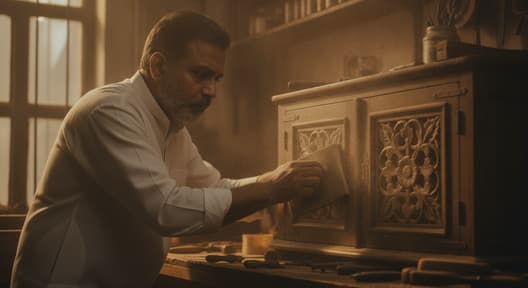
The Complete Furniture Restoration Process Explained: From Inspection to Final Finish
Most homeowners commissioning furniture restoration for the first time have no clear picture of what actually happens between the technician's arrival and the finished piece. This guide walks through every stage of the professional process — the inspection protocols, the repair sequence, the material decisions, and the quality checkpoints — so you understand exactly what you are paying for and why each stage matters.
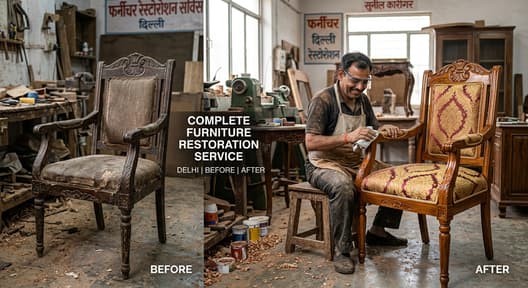
Complete Guide to Furniture Restoration in Delhi — 2026 Edition
A comprehensive, updated guide to every type of furniture restoration service available in Delhi NCR — from sofa repair and wood refinishing to brand-specific fixes and area-wise coverage.

Furniture Restoration Cost in Delhi NCR 2026: The Complete Price Guide
How much does furniture restoration cost in Delhi NCR in 2026? This comprehensive pillar guide covers every furniture type, repair category, and area — from sofa spring repair to full wooden furniture restoration.
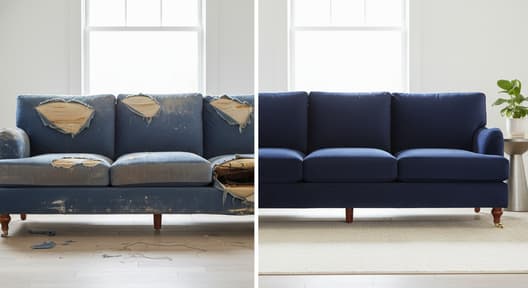
Furniture Repair vs Replace: Which Is the Smarter Choice?
Torn between repairing and replacing your old furniture? This guide compares real costs and helps you decide what makes sense for your budget and your home.